
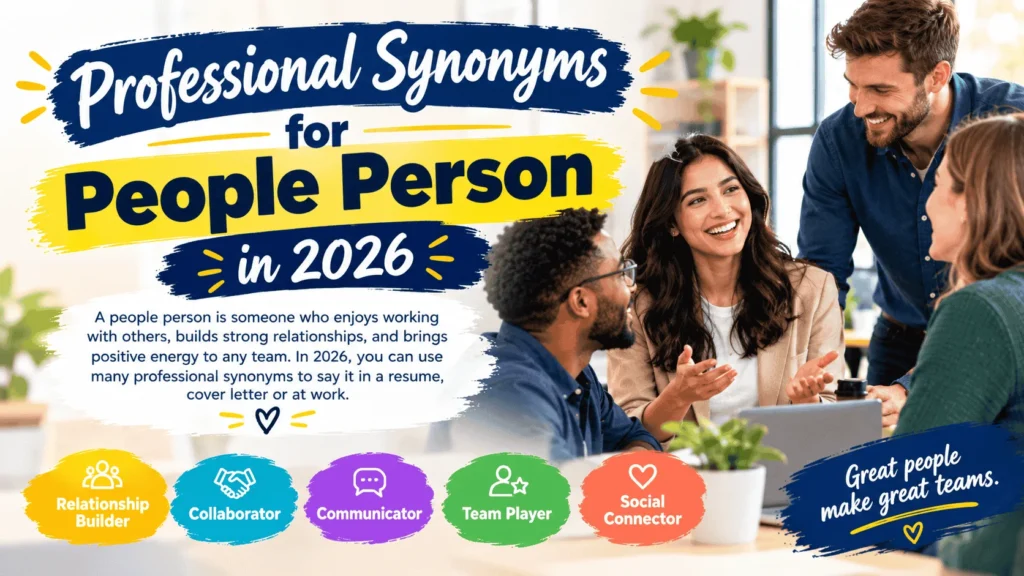
If you describe yourself as a “people person,” you mean that you enjoy interacting with others, communicate well, build relationships easily, and feel comfortable in social or professional settings. While “people person” sounds friendly and natural, it can feel too casual for a resume, cover letter, business email, LinkedIn profile, or formal workplace conversation.
That is why many professionals search for professional synonyms for people person that communicate the same strengths with more precise business language.
Depending on the situation, you might describe yourself as a strong communicator, relationship builder, team-oriented professional, personable professional, collaborative colleague, or client-focused professional.
The best alternative depends on what you actually want to emphasize. For example, “relationship builder” highlights networking skills, while “client-focused professional” works better in customer-facing roles.
This guide explains 25 professional alternatives, their tone, best uses, and real examples so you can choose the right expression for emails, resumes, interviews, networking, customer service, and workplace communication.
What Does “People Person” Mean?
Literal Meaning
A “people person” describes someone who enjoys being around other people and communicates comfortably with them.
A people person often:
- Enjoys conversations and social interaction
- Builds relationships quickly
- Works well with different personalities
- Communicates ideas clearly
- Makes others feel comfortable
- Enjoys teamwork and collaboration
- Handles customer or client interactions well
- Builds professional networks
- Shows empathy and emotional awareness
For example:
“Sarah is a real people person who enjoys working with customers.”
The sentence sounds positive, but it has a conversational tone.
Tone of “People Person”
“People person” usually sounds:
- Friendly
- Positive
- Casual
- Approachable
- Conversational
- Somewhat informal
It works well in everyday conversations and less formal workplace settings.
However, a resume might benefit from a more specific phrase:
“Strong relationship-building and communication skills.”
This wording tells the reader exactly what professional strength you offer.
Purpose and Emotional Context
The phrase usually communicates more than communication skills. It can suggest warmth, approachability, empathy, confidence, and social awareness.
However, “people person” can sometimes sound vague because it does not explain how you work well with people.
Compare:
“I am a people person.”
with:
“I build strong relationships with clients and colleagues through clear communication and active listening.”
The second example provides evidence of the skill rather than simply naming it.
25 Professional Synonyms for “People Person”
Below are practical alternatives grouped by professional, formal, friendly, email, and workplace contexts.
1. Strong Communicator
Tone: Professional and confident
Best use: Resumes, interviews, workplace communication
“Strong communicator” emphasizes your ability to exchange information clearly and effectively.
Example:
“I am a strong communicator who works well with clients, colleagues, and cross-functional teams.”
This is one of the safest professional alternatives to “people person.”
2. Relationship Builder
Tone: Professional and business-focused
Best use: Sales, networking, management, client relationships
“Relationship builder” highlights your ability to create and maintain meaningful professional connections.
Example:
“I am a strong relationship builder with experience developing long-term client partnerships.”
This phrase works especially well when your role involves networking or account management.
3. Personable Professional
Tone: Polished and friendly
Best use: Resumes, cover letters, customer-facing roles
“Personable professional” communicates warmth while retaining a professional tone.
Example:
“I am a personable professional who creates positive experiences for customers and colleagues.”
It works well when you want to sound approachable without sounding too casual.
4. Collaborative Professional
Tone: Professional
Best use: Resumes, interviews, team environments
Use this phrase when your strength comes from working effectively with others.
Example:
“I am a collaborative professional who contributes effectively to cross-functional projects.”
It emphasizes teamwork rather than social confidence.
5. Team-Oriented Professional
Tone: Professional and straightforward
Best use: Resumes, cover letters, workplace communication
This phrase works well when you want to show that you value teamwork.
Example:
“I am a team-oriented professional who enjoys working toward shared goals.”
6. People-Focused Professional
Tone: Professional and modern
Best use: Customer service, HR, management, healthcare, sales
This is one of the closest formal alternatives to “people person.”
Example:
“I am a people-focused professional committed to creating positive client experiences.”
It keeps the core meaning while sounding more business-oriented.
7. Client-Focused Professional
Tone: Formal and business-oriented
Best use: Sales, consulting, customer service, account management
Use this alternative when your ability to work with people centers on clients.
Example:
“I am a client-focused professional with a strong ability to understand customer needs.”
8. Customer-Focused Professional
Tone: Professional and service-oriented
Best use: Customer service, retail, hospitality, support
Example:
“I am a customer-focused professional who enjoys resolving concerns and building positive relationships.”
This phrase gives “people person” a specific business purpose.
9. Interpersonally Skilled
Tone: Formal
Best use: Resumes, performance reviews, professional profiles
This expression directly emphasizes interpersonal ability.
Example:
“An interpersonally skilled professional with experience working with diverse teams.”
It sounds more formal than “people person.”
10. Effective Relationship Manager
Tone: Formal and corporate
Best use: Management, sales, account management, client services
Example:
“I am an effective relationship manager with a strong record of maintaining client partnerships.”
This works particularly well when relationship management forms part of your job.
11. Skilled at Building Rapport
Tone: Professional and polished
Best use: Interviews, sales, customer service, networking
“Building rapport” means creating a comfortable and positive connection with another person.
Example:
“I am skilled at building rapport with clients and understanding their needs.”
This phrase often provides a stronger professional alternative than simply calling yourself a people person.
12. Excellent With People
Tone: Friendly and professional
Best use: Interviews, workplace conversations, cover letters
Example:
“I am excellent with people and enjoy creating productive working relationships.”
This remains relatively conversational but sounds more direct.
13. Strong Interpersonal Skills
Tone: Professional and formal
Best use: Resumes, applications, performance reviews
Example:
“I bring strong interpersonal skills and the ability to work effectively with diverse teams.”
This is a highly useful synonym for “people person” in professional writing.
14. Highly Approachable
Tone: Friendly and professional
Best use: Management, leadership, customer service, workplace communication
Example:
“I maintain an approachable communication style that encourages team members to share ideas and concerns.”
This focuses on making others feel comfortable speaking with you.
15. Empathetic Communicator
Tone: Professional and thoughtful
Best use: Leadership, HR, healthcare, customer service, management
Example:
“I am an empathetic communicator who listens carefully and responds to customer concerns with patience.”
This alternative works well when empathy represents an important part of being a people person.
16. Relationship-Oriented
Tone: Professional
Best use: Sales, networking, leadership, client services
Example:
“I take a relationship-oriented approach to client management.”
This phrase sounds polished without becoming overly formal.
17. Team Player
Tone: Friendly and professional
Best use: Resumes, interviews, workplace communication
Example:
“I am a dependable team player who communicates openly and supports shared goals.”
Although common, “team player” works when teamwork represents the specific quality you want to highlight.
18. Collaborative Team Member
Tone: Professional
Best use: Resumes, performance reviews, workplace communication
Example:
“I am a collaborative team member who values open communication and shared problem-solving.”
This gives “people person” a workplace-focused meaning.
19. Strong Networker
Tone: Professional and modern
Best use: Sales, business development, networking, LinkedIn profiles
Example:
“I am a strong networker who enjoys developing meaningful professional connections.”
This option works best when social interaction directly supports business development.
20. Community-Oriented Professional
Tone: Professional and warm
Best use: Nonprofits, education, public relations, community roles
Example:
“I am a community-oriented professional who enjoys connecting people with valuable resources.”
This alternative works particularly well for socially focused careers.
21. Client Relationship Specialist
Tone: Formal and corporate
Best use: Sales, consulting, banking, account management
Example:
“As a client relationship specialist, I focus on understanding customer needs and developing lasting partnerships.”
22. Customer-Centric Professional
Tone: Formal and corporate
Best use: Customer experience, sales, support, business operations
Example:
“I am a customer-centric professional who prioritizes clear communication and practical solutions.”
This sounds more strategic than “people person.”
23. Socially Confident Professional
Tone: Professional and modern
Best use: Interviews, networking, sales
Example:
“I am a socially confident professional who communicates comfortably with clients and senior stakeholders.”
24. Engaging Communicator
Tone: Professional and positive
Best use: Presentations, training, leadership, client-facing work
Example:
“I am an engaging communicator who connects effectively with audiences across different professional settings.”
25. Relationship-Focused Communicator
Tone: Polished and professional
Best use: Emails, resumes, leadership, networking
Example:
“I use a relationship-focused communication style when working with clients and colleagues.”
This option combines communication ability with relationship-building skills.
Quick Comparison Table
| Alternative | Tone | Best Use |
|---|---|---|
| Strong communicator | Professional | Resume, workplace |
| Relationship builder | Business-focused | Networking, sales |
| Personable professional | Friendly | Resume, client work |
| Collaborative professional | Professional | Teamwork |
| Team-oriented professional | Professional | Resume |
| People-focused professional | Modern | Customer service |
| Client-focused professional | Formal | Client relationships |
| Customer-focused professional | Professional | Customer service |
| Interpersonally skilled | Formal | Resume |
| Skilled at building rapport | Polished | Sales, networking |
| Strong interpersonal skills | Formal | Resume |
| Highly approachable | Friendly | Leadership |
| Empathetic communicator | Professional | Management, service |
| Relationship-oriented | Corporate | Sales |
| Team player | Friendly | Workplace |
| Strong networker | Modern | Networking |
| Customer-centric professional | Corporate | Customer experience |
| Engaging communicator | Professional | Presentations |
| Relationship-focused communicator | Polished | Business communication |
How to Use These Alternatives in Professional Communication
In Emails
Business emails should communicate your strengths clearly without sounding like a casual conversation.
Instead of:
“I’m a real people person and love working with customers.”
Try:
“I enjoy building strong relationships with customers and understanding their needs.”
Or:
“I bring strong interpersonal and communication skills to every client interaction.”
These versions follow better email etiquette because they focus on specific professional strengths.
In the Workplace
When discussing your personality with a manager or colleague, you can use friendlier alternatives.
For example:
“I’m highly approachable and enjoy collaborating with different teams.”
Or:
“I work well with different personalities and enjoy building strong working relationships.”
These phrases sound natural while maintaining professional communication.
With Clients
Client communication requires warmth and professionalism.
Instead of:
“I’m a people person, so you can always talk to me.”
Use:
“I’m always happy to discuss your needs and find a solution that works for you.”
Or:
“I take a client-focused approach and value clear, open communication.”
In Networking
Networking requires a balance between confidence and friendliness.
You might say:
“I enjoy building meaningful professional connections.”
Or:
“I’m passionate about developing strong professional relationships.”
These phrases communicate the same idea as “people person” without sounding informal.
In Customer Service
Customer service professionals can emphasize empathy, patience, communication, and relationship-building.
For example:
“I’m an empathetic communicator who enjoys helping customers find practical solutions.”
This provides much more information than simply saying:
“I’m a people person.”
Email Examples
Client Email
“I enjoy building strong relationships with clients and making sure their needs receive careful attention.”
Email to a Manager
“I believe my strong interpersonal skills help me collaborate effectively with colleagues across different teams.”
Email to a Colleague
“I enjoy working with different teams and building positive working relationships.”
Customer Email
“I’m happy to discuss your concerns and work with you to find the best solution.”
Networking Email
“I enjoy connecting with professionals from different backgrounds and building meaningful relationships.”
Meeting Follow-Up
“It was a pleasure speaking with you. I enjoyed learning more about your work and discussing potential opportunities to collaborate.”
Common Mistakes When Replacing “People Person”
1. Choosing an Alternative That Sounds Too Generic
“Good with people” communicates very little.
Instead, identify the actual strength:
- Communication
- Teamwork
- Empathy
- Networking
- Customer service
- Relationship management
- Leadership
For example:
“Strong interpersonal skills”
is usually stronger than:
“Good with people.”
2. Using Corporate Jargon
Some alternatives sound unnecessarily complicated.
For example:
“Stakeholder-centric interpersonal engagement specialist”
sounds unnatural.
Simple language usually works better:
“Strong relationship builder.”
Professional communication should sound clear, not impressive for its own sake.
3. Using “People Person” on a Formal Resume Without Evidence
The phrase can sound subjective.
Instead of:
“I am a people person.”
Use:
“Built strong relationships with more than 50 recurring clients.”
Specific achievements provide stronger evidence.
4. Using the Wrong Tone
A formal phrase can sound awkward in a casual email.
For example:
“I am an interpersonally proficient professional.”
may sound stiff in a message to a close colleague.
A more natural option would be:
“I enjoy working with different people and teams.”
5. Repeating the Same Phrase
Avoid using “strong communicator,” “relationship builder,” and “interpersonal skills” repeatedly throughout a resume.
Vary your language and connect each phrase to an actual achievement.
Related Phrases and Expressions
Here are useful expressions related to “people person”:
- Strong communicator — communicates ideas clearly.
“She is a strong communicator who works well with clients.” - Team player — works effectively with others.
“He is a dependable team player.” - Relationship builder — develops lasting connections.
“She is an effective relationship builder.” - Good interpersonal skills — interacts effectively with others.
“The role requires strong interpersonal skills.” - Customer-focused — prioritizes customer needs.
“He takes a customer-focused approach.” - Client-oriented — prioritizes client relationships.
“She is highly client-oriented.” - Approachable — easy and comfortable to speak with.
“Our manager is approachable and supportive.” - Empathetic — understands other people’s feelings and concerns.
“She takes an empathetic approach to customer service.” - Collaborative — works effectively with others.
“He has a highly collaborative working style.” - Personable — friendly and pleasant to interact with.
“She has a personable communication style.” - Engaging — captures attention and encourages interaction.
“He is an engaging presenter.” - Relationship-oriented — values professional connections.
“She uses a relationship-oriented approach.” - Socially confident — comfortable interacting with others.
“He is socially confident when meeting new clients.” - Good at building rapport — creates comfortable connections.
“She is excellent at building rapport with customers.” - People-focused — prioritizes human interaction and needs.
“He takes a people-focused approach to leadership.” - Customer-centric — centers decisions around customers.
“She brings a customer-centric mindset to the role.” - Networking-oriented — comfortable developing professional connections.
“He has a strong networking-oriented approach to business development.”
“People Person” vs. Professional Alternatives
| Phrase | Formality | Tone | Best Use |
|---|---|---|---|
| People person | Low | Friendly | Casual conversation |
| Good with people | Low | Casual | Everyday workplace talk |
| Personable professional | Medium | Warm | Resume, interview |
| Strong communicator | Medium | Professional | Resume, email |
| Relationship builder | Medium | Business-focused | Sales, networking |
| Strong interpersonal skills | High | Formal | Resume |
| Empathetic communicator | Medium-high | Thoughtful | Leadership, service |
| Client-focused professional | High | Corporate | Client roles |
| Customer-centric professional | High | Corporate | Customer experience |
| Collaborative professional | Medium | Professional | Team environments |
| Skilled at building rapport | Medium | Polished | Sales, interviews |
| Relationship-focused communicator | Medium-high | Professional | Business communication |
The best synonym depends on the specific quality you want to communicate.
If you mean “I communicate well,” use “strong communicator.”
If you mean “I build professional connections,” use “relationship builder.”
If you mean “I work well with teams,” use “collaborative professional.”
If you mean “I treat customers well,” use “customer-focused professional.”
If you mean “I make people feel comfortable,” use “personable professional” or “highly approachable.”
Cultural and Professional Usage
US English
In American business communication, “people person” sounds natural and friendly but remains somewhat informal.
Professional alternatives such as “strong communicator,” “relationship builder,” and “team player” commonly fit workplace settings.
For formal applications, specific skills usually work better than personality labels.
UK English
British English also uses “people person,” especially in conversational settings. However, professional writing often favors phrases such as:
- Strong interpersonal skills
- Good communication skills
- Collaborative
- Personable
- Relationship-focused
The best choice depends on the industry and level of formality.
Corporate Communication
Corporate communication often favors measurable or specific competencies.
Instead of:
“I’m a people person.”
Try:
“I excel at building productive relationships with clients and internal stakeholders.”
This sounds more precise and business-focused.
Customer Service
Customer service professionals should emphasize empathy, patience, communication, and problem-solving.
For example:
“I am an empathetic communicator who focuses on creating positive customer experiences.”
Networking
Networking language should sound confident without becoming overly formal.
Good choices include:
- Relationship builder
- Strong networker
- Skilled at building rapport
- Relationship-oriented
- Engaging communicator
FAQs
1. What is a professional way to say “people person”?
Some of the best professional alternatives include “strong communicator,” “relationship builder,” “personable professional,” “strong interpersonal skills,” and “collaborative professional.” Choose the phrase that describes your specific strength.
2. What is a formal alternative to “people person”?
“Strong interpersonal skills” is one of the most formal alternatives. Other options include “interpersonally skilled,” “relationship-focused professional,” and “client-focused professional.”
3. What is a good synonym for “people person” on a resume?
Use “strong interpersonal skills,” “relationship builder,” “strong communicator,” “collaborative professional,” or “client-focused professional.” Add an achievement or example whenever possible.
4. How do I say I am a people person professionally?
Instead of saying “I am a people person,” try:
“I build strong professional relationships through clear communication and active listening.”
This version explains the skill behind the personality trait.
5. What is a professional way to say “good with people”?
You can say:
“I have strong interpersonal skills.”
You can also use:
“I communicate effectively with diverse teams and clients.”
6. Is “people person” professional?
“People person” is positive but somewhat informal. It works in casual conversations, interviews, and friendly workplace discussions, but more specific wording usually works better in formal business communication and resumes.
7. What is the best people-person synonym for a resume?
“Strong interpersonal skills” is one of the safest choices. However, “relationship builder” may work better for sales, networking, and account management roles.
8. What is a professional way to say you enjoy working with people?
You could say:
“I enjoy collaborating with diverse teams and building strong professional relationships.”
This sounds natural and professional without relying on a vague personality label.
9. What is a good synonym for “people person” in an interview?
“Personable professional,” “strong communicator,” and “relationship builder” work well. However, support the phrase with an example.
For example:
“I’m a strong relationship builder. In my previous role, I developed long-term relationships with key clients by maintaining regular communication and understanding their needs.”
10. What is the best alternative to “people person” in a business email?
For a business email, use a specific phrase such as “strong communicator,” “relationship-focused,” “client-focused,” or “collaborative.”
For example:
“I value clear communication and enjoy building productive relationships with clients and colleagues.”
Final Summary
The best professional synonyms for people person depend on the setting and the exact quality you want to highlight. For resumes, “strong interpersonal skills” and “strong communicator” offer safe, polished choices. For sales and networking, “relationship builder” and “skilled at building rapport” work especially well. For customer-facing roles, choose “client-focused professional” or “customer-centric professional.” For teamwork, “collaborative professional” and “team-oriented professional” fit naturally. In emails, keep your wording simple and specific. Rather than simply saying you are a people person, explain how you communicate, collaborate, build relationships, or support others. Specific language creates stronger professional communication.




